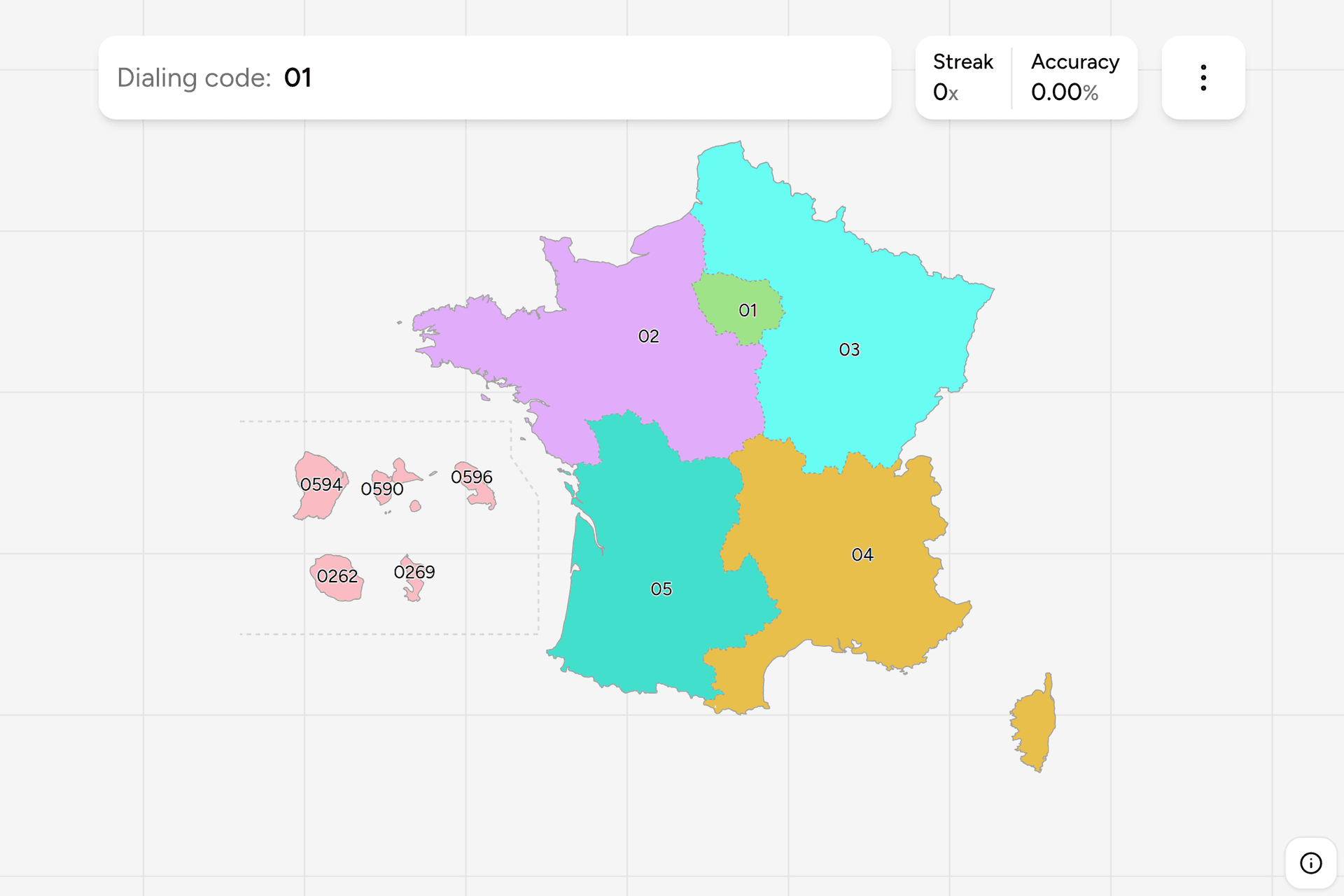
France is the easiest phone number in Europe to read, because the country is cut
into five dialing zones and the zone is the very first thing you see. A number
painted on a van in Brittany cannot start with the same two digits as one in
Marseille, so two characters of a ten digit number put you in the right quarter
of the country before you have read anything else. This page is the whole plan,
and the game drills it.
- The clue
- Landline dialing codes
- Where it works
- Vans, shopfronts, estate agent boards
- In the game
- 10 codes
What you are looking at
A French phone number is ten digits, and it is almost always written as five
pairs: 02 98 12 34 56. That first pair is the whole clue. The leading 0 is
the trunk prefix, which is why the same number turns up as +33 2 98 12 34 56
on anything aimed at a foreign reader: the zero is dropped and the zone digit
comes straight after the country code.
The five mainland zones were drawn along department boundaries in 1996, and they
have not moved since. They do not follow the modern regions, which is worth
knowing because one region is split down the middle: the Toulouse half of
Occitanie dials one zone and the Montpellier half dials another.
The overseas departments were never folded into that scheme. They kept their own
codes, which are four digits rather than two, so a number that opens with a
longer prefix is not in mainland France at all.
How to read one
- Read the first pair. If it is
01 you are in and around Paris. Anything
else in the 02 to 05 range is one of the four quarters of the mainland.
- Check whether the prefix is longer. Four digits before the number breaks
into pairs means an overseas department, and that is a different map.
- Read the second pair only if you need to. It narrows the zone down to
something the size of a department or a city, but the zone alone is usually
the difference between a good guess and a wrong country.
The zones run clockwise. Paris takes 01 in the middle, and the four that
surround it start in the north west and go round: north west, north east, south
east, south west. That is one sentence, and it is most of what this clue is.
The failure mode is mistaking a mobile or a service number for a geographic one.
Those are the numbers that start 06, 07, 08 or 09, and none of them says
anything about where the phone is.
Every code, by zone
- Île-de-France1 code
- 01
- North West1 code
- 02
- North East1 code
- 03
- South East1 code
- 04
- South West1 code
- 05
- Overseas5 codes
- 0262, 0269, 0590, 0594, 0596
Each group can be played on its own from the game's start dialog, which is the
quickest way to learn the overseas codes: they are the half of this game that
does not follow from a mnemonic.
Worked examples
01The exceptionParis and the eight departments of the Ile-de-France around it. It is the
smallest zone on the map by a wide margin and the one you will see most often,
because so much French business signage points at the capital.
04The largestThe south east, from Lyon down to the Mediterranean, out to the Alps and
across to Corsica. It also picks up the Languedoc end of Occitanie, which is
the part people get wrong: Nimes, Montpellier and Perpignan dial with the
south east rather than with Toulouse.
0596Four digitsMartinique. Anything with a four digit prefix is an overseas department, and
the three that sit close together in this range are the Caribbean and Atlantic
set: Guadeloupe and French Guiana take the other two. The two in the Indian
Ocean start differently, which is the only sorting this group needs.
Frequently asked questions
How many digits is a French phone number?
Ten, written as five pairs. The first pair is the dialing code and the remaining eight are the subscriber number. Dialled from abroad the leading zero is dropped and the country code 33 goes in front, which is why the same number can look nine digits long on a website.
What do the French dialing codes 01 to 05 mean?
They are geographic zones. 01 is Paris and the Ile-de-France, and the other four divide the rest of mainland France into quarters running clockwise from the north west. The boundaries follow department lines rather than the modern administrative regions.
What are the French numbers starting 06 and 07?
Mobiles. They are allocated nationally and tell you nothing about where the phone or its owner is, so a mobile number on a van is a dead end for locating it.
What is a French 09 number?
A non geographic line, usually voice over IP from an internet provider. Like the mobile ranges it carries no location. Numbers starting 08 are service and premium rate lines and are equally useless as a clue.
Do the French overseas departments use the same codes?
No. Each keeps a four digit prefix of its own, dialled with the same leading zero, so an overseas number breaks into a longer first group than a mainland one. That difference in shape is visible before you have read a single digit.
Where do you see phone numbers in French Street View?
On commercial vehicle livery above all, which is the most reliable place in France, and then on shopfronts, estate agent boards and roadside advertising for local trades.
France is the gentlest of the dialing code trainers, because five answers is a
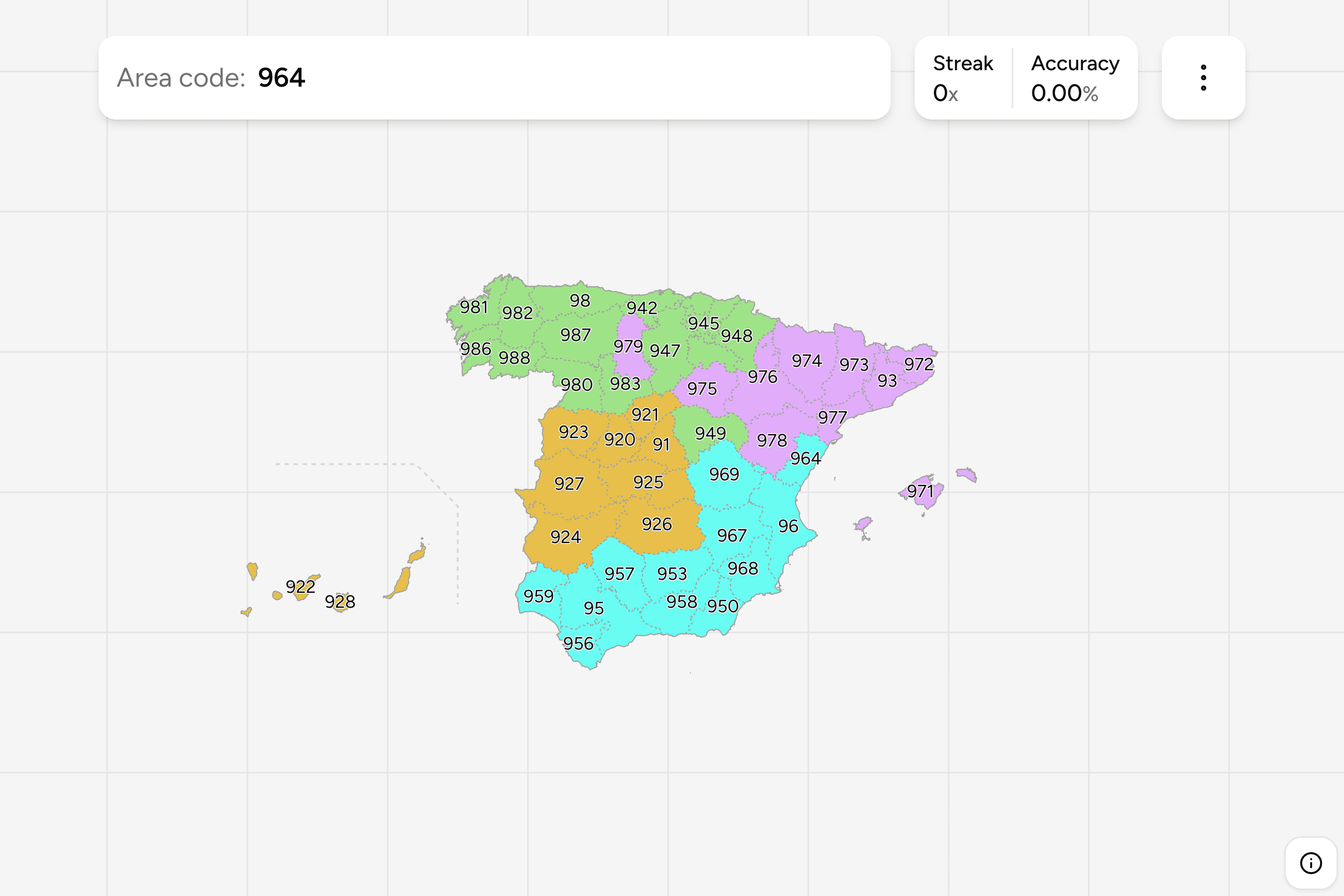
map you can hold in your head. The Spanish codes are the
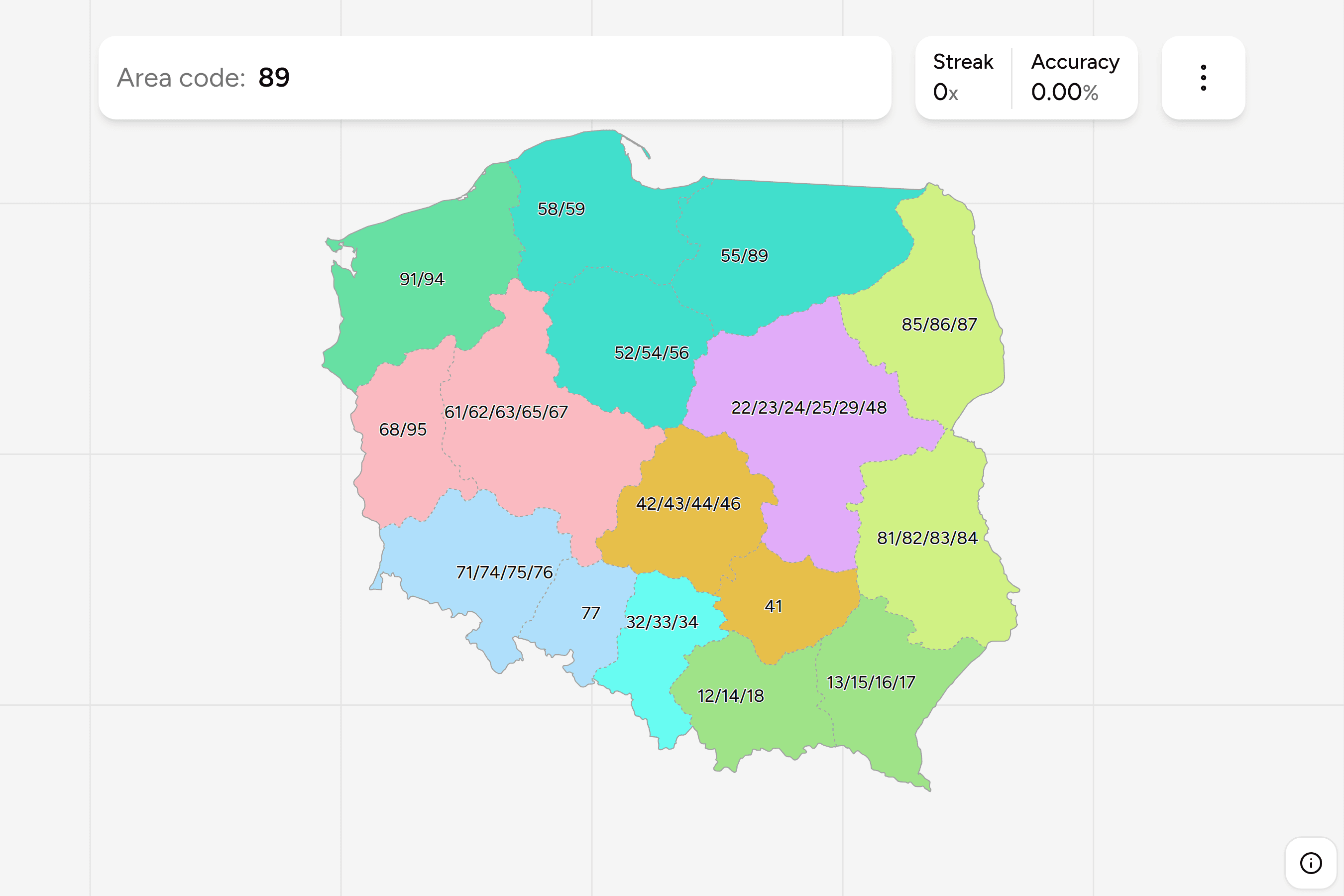
natural next step, and the Polish codes after that.
Sources